Choosing a self-defence class can feel a bit like trying to pick the right car. Everyone has an opinion, every "brand" claims to be the best, and if you aren’t careful, you might end up with something that looks flashy but doesn't actually get you where you need to go.
Whether you’re looking to boost your confidence, get fit, or simply feel safer walking home after dark, finding the right environment is key. At the British Kempo Society, we’ve seen hundreds of adults walk through our doors with these exact questions. That’s why we’ve put together this guide to help you compare the most popular styles and find the perfect fit for your lifestyle.
What Do You Actually Want to Achieve?
Before you even look at a timetable, you need to be honest with yourself about your goals. Not all self-defence classes are created equal. Some focus on the "art," some on the "sport," and others on the "reality."
1. The Reality-First Approach
If your only goal is "I want to survive a confrontation," you need a style that emphasizes practical, high-pressure scenarios. You’ll want to look for classes that teach you how to deal with multiple attackers or how to stay calm when someone is shouting in your face.
2. Fitness and Confidence
Perhaps you aren't expecting to be in a street fight tomorrow, but you want to know that you could handle yourself if you had to. In this case, a high-energy striking class like kickboxing might be your best bet. It builds the "gas tank" you need to stay in a fight (or run away from one) while teaching you how to throw a solid punch.
3. A Supportive Community
For many adults, the "self-defence" part is just the hook. What keeps them coming back is the camaraderie. You want a place where you can learn serious skills without the "tough guy" ego. Our About page dives deeper into how we build that sense of belonging here in our society.
Comparing the Major Styles for Adult Self-Defence
When you start searching for "self-defence near me," you’ll likely see a few names pop up repeatedly. Let's break down how they stack up against each other.
Kempo (Kenpo)
Kempo is often described as the "original" mixed martial art. It’s a fantastic system for adults because it’s incredibly versatile. It combines the rapid-fire striking of karate with the joint locks and throws of traditional Jiu Jitsu.
- Strengths: It gives you a massive "toolbox." You learn how to hit, how to grab, and how to get away.
- Best for: Adults who want a comprehensive system that covers all the bases.
Ju Jitsu (Traditional & Brazilian)
Ju Jitsu is all about using your opponent’s energy against them. Traditional Ju Jitsu focuses on standing self-defence: think wrist locks, throws, and pressure points. Brazilian Jiu Jitsu (BJJ) is more about ground fighting.
- Strengths: Excellent for smaller people who need to defend against larger attackers. It teaches you how to control someone without necessarily having to knock them out.
- Best for: People who like "human chess" and technical problem-solving.
Kickboxing
Kickboxing is primarily a striking art. You’ll learn how to use your hands, feet, shins, and knees.
- Strengths: Incredible for cardiovascular fitness and developing "knockout" power. It’s very pressure-tested; you’ll learn exactly what it feels like to land a strike.
- Best for: Those who want to get in the best shape of their lives while learning effective stand-up skills.
Krav Maga
Krav Maga isn't technically a martial art; it’s a tactical system. It’s designed to be learned quickly and used immediately.
- Strengths: Very aggressive and focused on finishing a fight as fast as possible. It includes weapon defence and situational awareness.
- Best for: People who want a "no-nonsense" approach and aren't interested in traditional belts or forms.

The "Red Flags" to Watch Out For
Once you’ve picked a style, you need to pick a school. This is where most people go wrong. Here are three things to check before you sign any contracts.
1. The Instructor’s Vibe
Is the instructor approachable? Do they use the title "Sensei" or "Coach" with a sense of responsibility, or a sense of ego? A great instructor, like those you’ll find on our Instructors page, should be able to explain the "why" behind every move. If they tell you "because I said so," run.
2. The Training Environment
Look at the other students. Are they people you’d want to grab a coffee with? Adult self-defence should be safe. If you see students getting injured every week, or if the "ego" in the room is palpable, it’s not the right place to learn. You can't learn to defend yourself if you’re always sidelined with a broken rib from a training partner who doesn't know how to pull their punches.
3. Lack of "Alive" Training
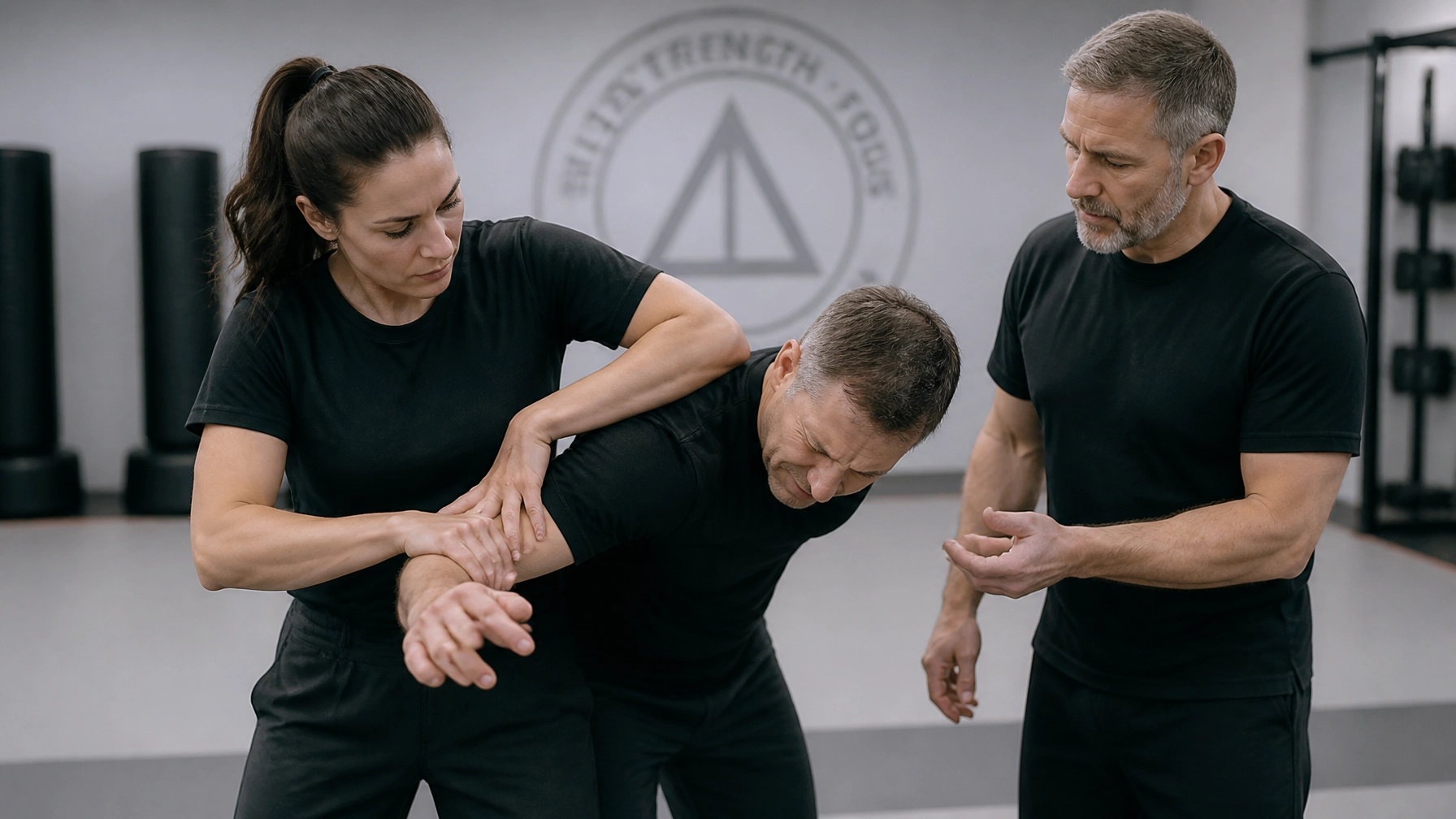
If you only ever practice moves against a partner who is standing perfectly still and "letting" you do the technique, you aren't learning self-defence. You’re learning choreography. Look for a class that incorporates controlled sparring or "pressure testing" where your partner offers some resistance.

Why British Kempo Society is Different
At the British Kempo Society, we don't believe in sticking to just one silo. Our approach is a blend of the most effective techniques from Kempo, Ju Jitsu, and Kickboxing. We call it "Practical Kempo."
We understand that as an adult, your time is precious. You don't have 10 years to spend learning a single kata. You want skills that work now, taught in an environment that respects your physical limits while pushing you to improve. Whether it’s your first day or you're preparing for your upcoming grading, the focus is always on your personal development.
Our founder, Rebecca, also brings a unique perspective to the mat. You can see more about her philosophy on her personal site, The Dancing Fighter. She believes that martial arts should be a fluid, expressive, and ultimately empowering part of your life: not just a set of rigid movements.
Practical Tips for Your First Class
If you’re feeling nervous about your first session, don't worry: everyone is! Here’s how to prepare:
- Wear Comfortable Clothes: You don't need a fancy gi on day one. A T-shirt and joggers are usually fine.
- Bring Water: You’re going to work harder than you think.
- Leave the Ego at the Door: You’re there to learn, not to win.
- Ask Questions: If a move feels weird, ask your Sensei to break it down.

Start Your Journey Today
Choosing the right self-defence class is the first step toward a more confident, capable version of yourself. Don't let the "what-ifs" hold you back. The community at British Kempo Society is ready to welcome you, regardless of your fitness level or previous experience.
If you have questions about which class is right for you, or if you'd like to book a trial session, head over to our Contact page and send us a message. We’d love to help you find your path.
Want more tips on staying safe and getting fit?
Subscribe to our newsletter for weekly insights from our Senseis, training tips, and updates on local seminars.