
By Sensei Rebecca : June 30, 2026
In a world that feels increasingly busy and sometimes a bit unpredictable, the desire to feel safe and confident is more than just a trend: it’s a necessity. Whether you’re looking to protect yourself on your way home from work, or you want your children to grow up with the confidence to handle a bully, choosing the right self-defence class is a huge decision.
But if you’ve ever searched for "self-defence classes near me," you’ve probably been overwhelmed by the options. There’s Karate, Kickboxing, BJJ, Krav Maga, and of course, our personal favorite here at the British Kempo Society, Kempo Ju Jitsu.
So, how do you choose? In this guide, we’re going to break down the different styles, show you what to look for in a club, and help you find the perfect fit for your lifestyle.
Step 1: Decide What You Actually Want
Before you even step foot on a mat, you need to ask yourself one simple question: "Why am I doing this?"
Not all martial arts are created equal. Some are designed for the "sport" of competition (like Olympic Taekwondo or Boxing), while others are focused purely on traditional culture. If your main goal is to feel safer in a real-world situation, you need a class that focuses on practical application.
Here are the four most common reasons people join us:
- Practical Personal Safety: You want to know how to escape a grab or defend against a strike.
- Fitness and Weight Loss: You’re bored of the treadmill and want a workout that actually keeps you engaged.
- Confidence and Discipline: This is huge for kids and adults alike. Martial arts builds a "can-do" attitude.
- Community: You want to meet like-minded people who value health and respect.
The Self-Defence Style Showdown
To make things easier, I’ve put together a quick comparison of the most popular styles you’ll find in the UK today.
1. Kempo Ju Jitsu (Our Speciality)
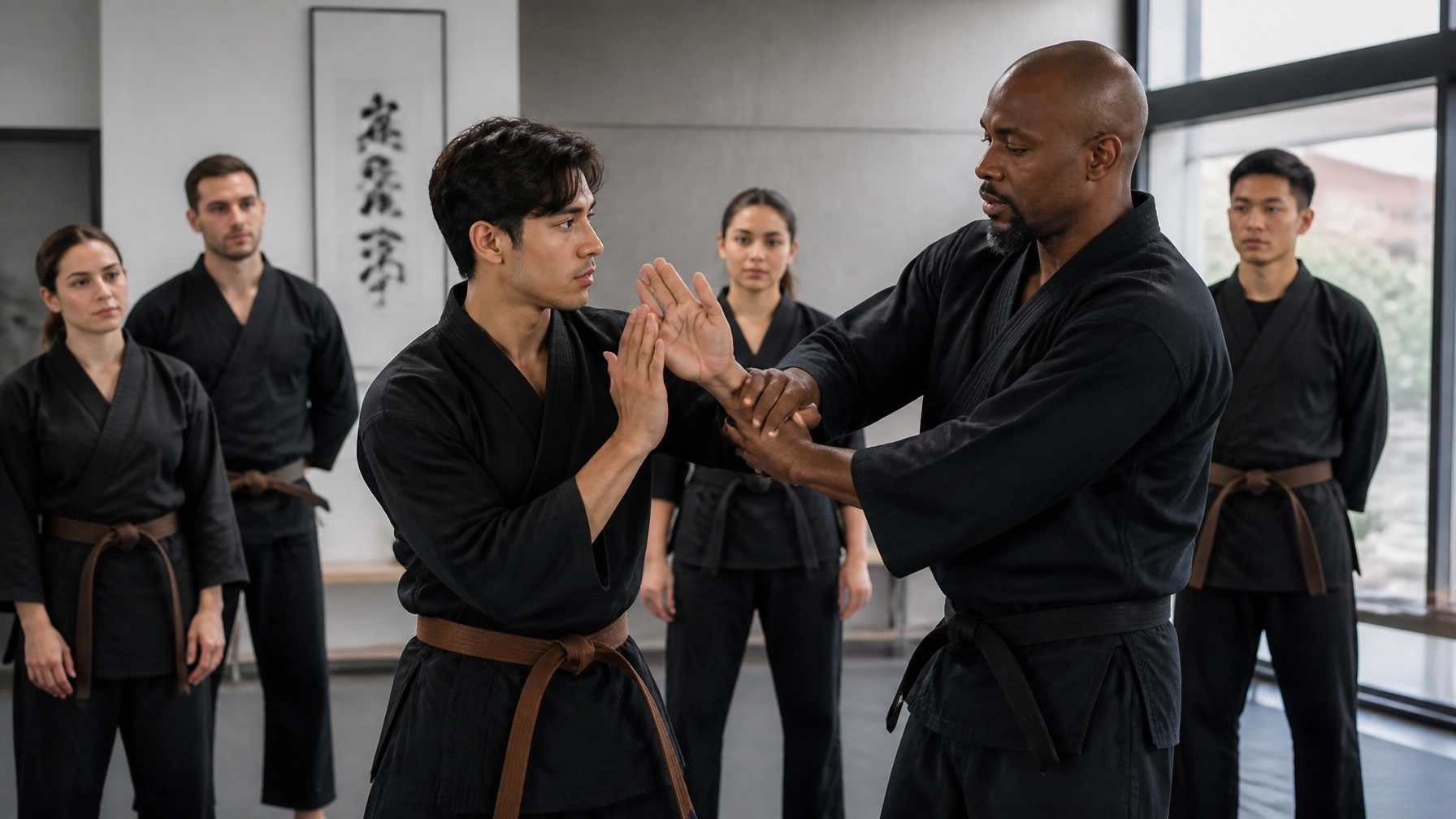
Kempo Ju Jitsu is often called the "original mixed martial art." It combines the striking of Karate with the throws and joint locks of Ju Jitsu.
- Best for: All-around self-defence. It covers everything from standing up to being on the ground.
- Why choose it: It’s extremely versatile and focuses on using an attacker’s energy against them, making it perfect for smaller people.
2. Kickboxing
Kickboxing is a high-energy sport that focuses on punches and kicks.
- Best for: Cardio, fitness, and learning how to strike effectively.
- Why choose it: If you want to sweat and burn calories while learning how to throw a powerful punch, this is it.
3. Brazilian Jiu-Jitsu (BJJ)
BJJ is almost entirely focused on ground fighting and submissions.
- Best for: One-on-one grappling.
- Why choose it: It’s incredible for learning how to survive if someone knocks you to the ground, though it lacks striking (punching/kicking) defense.
4. Krav Maga
A modern system developed for the military.
- Best for: Rapid, aggressive responses to threats.
- Why choose it: It focuses heavily on "scenarios" (like being attacked with a weapon), but make sure the school you choose does "pressure testing" (sparring) so you know the moves actually work.

What to Look for in a Great Club (The "Vibe Check")
Once you’ve picked a style, the next step is finding the right school. Not every club is a good fit. You could have the best system in the world, but if the instructor is a drill sergeant and the environment is toxic, you won’t stay long enough to learn anything.
Check the Instructor Credentials
You don't need to be an expert to spot a good teacher. Look for someone with a verifiable rank and, more importantly, a passion for teaching. At the British Kempo Society, our Instructors are dedicated to the progress of every student, whether they are a complete beginner or a seasoned black belt.
The Training Environment
When you walk in, does it feel welcoming? A good self-defence class should feel challenging but safe. You shouldn't be "used as a punching bag" on your first day. Look for a school that emphasizes "tap-out culture": where students respect each other's limits.
Is the Content Practical?
Ask the instructor: "How does this move work if someone is bigger than me?" If the answer is "It just does," run. A good instructor should be able to explain the mechanics of a move and how it applies to a real-life scenario.

Red Flags to Avoid
When shopping around, keep an eye out for these "McDojo" warning signs:
- Guaranteed Black Belts: If they promise you a black belt in 12 months, the belt is likely just a piece of fabric. Real skill takes time.
- No Sparring: If you never practice your moves against a partner who is actually trying to stop you, you won’t know if your skills work under pressure.
- Hidden Fees: Watch out for "testing fees," "equipment fees," and "association fees" that weren't mentioned upfront.
Why Community Matters More Than You Think
Learning to defend yourself can be intimidating. It’s a vulnerable process. That’s why we focus so much on the community aspect of martial arts. When you join a club like the British Kempo Society, you aren't just a customer; you're part of a family.
We often talk about the "shared identity" of our students. Whether you're training for your next grading or just trying to get through a tough week at work, having a group of people behind you makes all the difference. You can read more about our philosophy on our About Page.

Your Child’s Development
If you’re looking for classes for your children, the criteria change slightly. You want a school that focuses on bully-proofing and discipline. Martial arts isn't about teaching kids how to fight; it's about teaching them enough confidence so that they don't have to fight.
Our kids' programs are designed to be fun, engaging, and structured. We help them develop focus that carries over into their schoolwork and home life.
Ready to Start Your Journey?
Choosing a self-defence class is the first step toward a more empowered version of yourself. Don't worry about being "in shape" before you start: the classes are what get you in shape!
If you’re in the area and want to see what we’re all about, we’d love to meet you. You can find our current class schedule and location details on our Contact Page.
For those of you looking for a more personal look at the intersection of martial arts and movement, I also share my personal journey over at The Dancing Fighter.
Subscribe to Our Newsletter
Want more tips on personal safety, fitness, and martial arts history? Subscribe to our newsletter to stay updated on upcoming gradings, workshops, and community events. Let’s build a safer, more confident community together!