
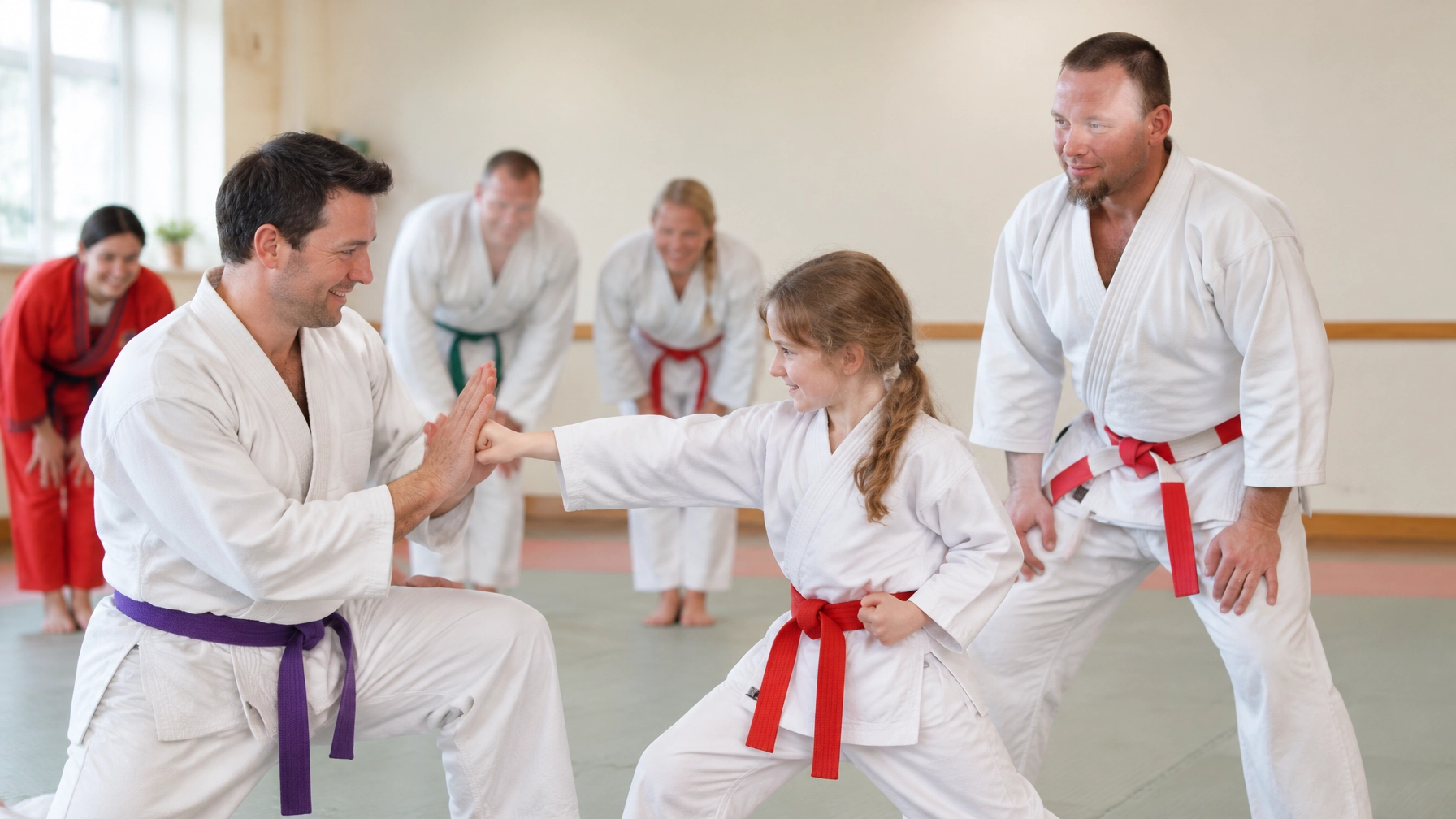
Thinking about martial arts but not sure where to begin? This plain-English guide explains the three main training pillars, what happens in your first class and how Kempo can support your fitness, confidence and personal safety.
Published 8 October 2026 · By Sensei Rebecca Kane, Senior Instructor
You do not need to be fit, flexible or experienced to start martial arts. You do not need to know how to punch, kick or fall safely. You simply need to be willing to learn.
At the British Kempo Society, training is built around people rather than ego. You can join as a complete beginner, train alongside your family, or connect with other martial arts clubs and centres across our UK network.
The simplest way to understand what we offer is through three connected pillars:
- Kempo Ju Jitsu and practical self-defence
- Self-defence classes for adults and martial arts for kids
- Kickboxing training for fitness, confidence and fun
Let’s walk through each one.
Pillar one: Kempo Ju Jitsu teaches you how to move, respond and stay calm
Kempo Ju Jitsu is a broad martial art. Depending on the class and your level, you may learn striking, blocking, movement, escapes, throws, joint-control techniques and groundwork.
However, practical self-defence is not about collecting impressive techniques. It starts with awareness, good judgement and knowing when to create distance or leave a situation.
That is why Kempo training develops more than physical ability. You practise:
- Moving with balance and control
- Protecting yourself from common attacks
- Using clear boundaries and confident communication
- Escaping safely rather than standing and fighting
- Staying calm enough to make sensible decisions
- Training with respect for your partner and the wider community
This approach makes Kempo useful for beginners and experienced martial artists alike. You work at a suitable pace, repeat the basics and gradually build a more reliable response under pressure.
It is also why our About page places such importance on inclusion, fairness, tradition and personal development. Martial arts should help you become stronger and more capable without losing kindness or self-control.
Why join ju jitsu classes?
Many people first look for ju jitsu classes because they want practical skills. Others want a different kind of workout or a new community.
You can gain both.
A typical session may challenge your legs, core, grip, coordination and cardiovascular fitness. You may also find that learning a new movement gives your mind a break from work, screens and everyday worries.
There is a useful kind of stress relief in concentrating on one task: your stance, your breathing, your partner’s movement or the next part of a drill. By the end of class, you may feel physically tired but mentally clearer.
Pillar two: self-defence classes and martial arts for the whole family
Self-defence classes for adults should be practical, respectful and realistic. They should not promise that one lesson will make you unbeatable. Instead, they should help you recognise risk, use your voice, move with purpose and understand what to do if a situation becomes unsafe.
That can be valuable whether you are:
- Returning to exercise after a long break
- Looking for more confidence in public spaces
- Supporting your personal safety at work or while travelling
- Wanting a positive activity to share with your partner or friends
- Searching for a welcoming form of martial arts for adults
For children, the focus must be age-appropriate. Martial arts for kids should not encourage children to pick fights. Good junior training can help your child develop balance, coordination, focus, discipline and teamwork while learning about boundaries and asking trusted adults for help.
A child may also become more comfortable speaking clearly, listening carefully and trying something that feels difficult at first. Those are life skills as much as martial arts skills.

Families are welcome to ask questions before joining. You can find out how sessions are structured, what equipment is needed and how the instructor adapts activities for age and ability.
The British Kempo Society also supports a wider community of clubs and centres. That means your progress is not limited to one weekly lesson. Across the network, students and instructors can take part in workshops, instructor-level training, gradings and shared events.
Pillar three: kickboxing training gives you a lively, full-body workout
Kickboxing training is one of the most enjoyable ways to improve your fitness. You use your legs, hips, shoulders, arms and core while working on timing and coordination.
A session may include:
- Footwork and stance
- Basic punches and kicks
- Focus-pad combinations
- Kick shields or bag work
- Mobility and conditioning exercises
- Partner drills
- A controlled fitness finisher
You do not need to arrive already strong or athletic. Beginners kickboxing should introduce movements gradually, giving you time to learn the technique before adding speed or intensity.
If you are searching for a kickboxing class for beginners, look for a club where you can ask questions, take breaks and train without feeling pressured to spar. Controlled pad work is often a better starting point than being thrown straight into contact.
Adult kickboxing classes can help you improve stamina, balance, strength and mobility. They can also give you a clear way to release tension after a busy day. There is something satisfying about completing a combination, hearing the pad land cleanly and realising that a movement which felt awkward last week now feels natural.
What if you were looking for karate in Huddersfield?
People often search online for karate Huddersfield when they really want a local martial arts class with structure, discipline and practical skills.
Kempo Ju Jitsu and kickboxing may be worth exploring if you want a broader mix of movement, self-defence and fitness. The important thing is to find an instructor and training community that suits your goals.
You can meet the wider team on our Instructors page, including Shihan Ben Ledwick, Head of Kempo Ju Jitsu.
What actually happens in your first class?
Feeling nervous before your first class is normal. Here is the simple version of what you can expect.
1. You arrive and introduce yourself
Try to arrive a little early. Tell the instructor that you are new, mention any injuries or health concerns and explain what you hope to get from training.
You will not be expected to know the etiquette immediately. Your instructor or another student will guide you.
2. You warm up
The class usually begins with simple movement, mobility and exercises to raise your heart rate. You may jog, stretch, practise footwork or work through bodyweight movements.
The aim is to prepare you safely, not to test how exhausted you can become.
3. You learn a small number of basics
Your first lesson may cover a stance, guard, step, punch, kick or simple self-defence movement. You will practise one part at a time before putting it together.
An experienced partner can help you understand the drill. You are not expected to remember everything straight away.
4. You practise with pads or controlled partner drills
Beginners normally start with safe, structured practice. You may work on focus pads, kick shields or a simple movement exercise.
Sparring is not a requirement for your first class. You should never feel pushed into contact before you are ready.
5. You finish, cool down and ask questions
At the end, you may do light conditioning, stretching or breathing work. This is a good time to ask about regular sessions, clothing, equipment and your next step.

Myth versus reality
Myth: “I need to get fit before I start.”
Reality: You can begin at your current fitness level. Exercises can be adapted, and your stamina will develop through regular training.
Myth: “Self-defence means learning to fight.”
Reality: Good self-defence includes awareness, communication, avoidance, escape and seeking help. Physical techniques are only one part of the picture.
Myth: “Kickboxing is only for young competitors.”
Reality: Beginners kickboxing can suit different ages, backgrounds and fitness levels. You can train for health, confidence and enjoyment without entering a competition.
Myth: “Martial arts classes are intimidating.”
Reality: The right club should be welcoming. You should see people encouraging one another, sharing knowledge and helping new students feel part of the community.
Learn from experienced instructors
The British Kempo Society combines traditional martial arts values with modern, practical training. Our instructors support everyone from complete beginners to competitors and club instructors.
Shihan Ben Ledwick leads Kempo Ju Jitsu and helps preserve the art’s technical depth, discipline and community spirit.
Rebecca Kane is a World Champion, Head of Weapons Training for the UK and Europe, and Senior Instructor. Alongside her work with the British Kempo Society, Rebecca offers online and in-person training through The Dancing Fighter, with a focus on confidence, resilience and empowerment.
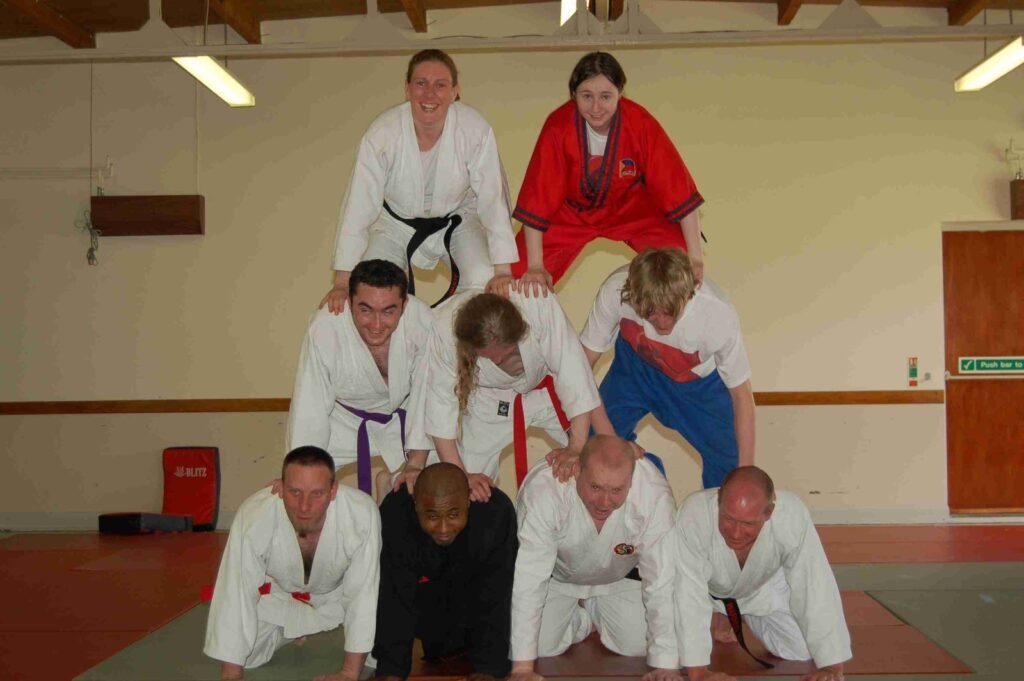
Ready to take your first step?
Whether you want practical self-defence, a fresh fitness routine, a positive activity for your child or a supportive martial arts community, Kempo and kickboxing give you plenty of ways to begin.
You do not need experience. You do not need to be at peak fitness. You simply need to turn up ready to learn.
Get in touch with the British Kempo Society to ask about a class, find a club or discuss training for your family or martial arts centre.
Start your journey, meet your community and discover what you can do.
Stay connected
Subscribe to the British Kempo Society network for news about classes, workshops, gradings, seminars and community events. Keep learning, keep moving and stay connected with fellow martial artists across the UK.