Good training partners do more than help you practise a technique: they turn a weekly class into something you look forward to. Discover how community can make all the difference, whether you’re new to martial arts or looking for a club in Yorkshire.
Published: 29 October 2026
With Shihan Ben Ledwick, Head of Kempo Ju Jitsu
A club is made by its people
You might first look for a martial arts club because you want to learn something new, try kickboxing training or explore martial arts and self defense. But what often brings you back is the people.
A good club is not just a room where everyone practises side by side. It’s a place where training partners encourage one another, experienced students help newcomers find their feet, and people of different ages and backgrounds share time on the mat. Over time, familiar faces can become friends, and a class can start to feel like part of your week.
That sense of belonging matters. Research on martial arts groups has found an association between feeling that you belong and continuing to take part. It doesn’t mean every club will suit every person, but it does help explain why a friendly atmosphere can be just as important as the training itself. Read one study on belonging and sports-club membership.
At the British Kempo Society, inclusion and respect are part of the values we aim to bring to our community. You can learn more about the Society and its history, and meet the instructors who share their knowledge with students at different levels.
Your first class is also your first connection
Walking into an unfamiliar class can feel like a big step. You may wonder who you’ll train with, whether you’ll know what to do, or if everyone else already knows one another.
You don’t need to arrive with a friend, or with experience. In a welcoming class, the instructor helps you understand what’s happening, and training partners work together so everyone can take part. A simple introduction, a shared drill or a friendly “how did that feel?” can turn a room of strangers into people you recognise next time.
Shihan Ben Ledwick, Head of Kempo Ju Jitsu, is closely linked with the Society and its wider community. The Society describes its approach as combining traditional Kempo values with modern training methods, and offering sessions and workshops for people at different experience levels. Ben’s role is not only about passing on techniques: it’s also about the shared practice, respect and learning that make training with others worthwhile.
If you’re looking up beginners kickboxing or a kickboxing class for beginners, the people around you can make the first sessions feel less daunting. And if you’re comparing local options: perhaps searching for karate Huddersfield, self defence classes or ju jitsu classes. It’s worth asking not just what a class teaches, but what it feels like to be part of it.

Training partners make practice a team effort
Martial arts involve plenty of individual effort. You learn a movement, work on the details and find your own pace. But much of that learning happens with other people.
A partner gives you the chance to practise a technique at a realistic pace. You take turns, pay attention to each other and adapt as you go. One person might spot a detail you missed; another may remember how confusing a move felt at the start and offer a useful tip. These small exchanges make practice feel like a shared task rather than a test.
For beginners, that can be a welcome change. You don’t have to know everything before joining in. You can ask a question, make a mistake, have another go and learn alongside people who are doing the same. That’s true in Kempo, kickboxing, and many self defence classes: the group gives you a place to practise with others, not just watch from the edge.
Ben Ledwick’s work in Kempo Ju Jitsu sits within this tradition of learning together. A club community is built lesson by lesson: through patience with a training partner, a nod of encouragement and the feeling that everyone has a part to play.
Kids and adults have a team around them
For children, martial arts for kids can be a chance to spend time with a regular group beyond school. They learn the rhythm of class, take turns with different partners and become part of a team with shared routines. Friendships may grow from these small moments: lining up together, practising a sequence or celebrating when the group gets it right.
Adults get that shared experience too. Martial arts for adults can bring people together across jobs, ages and backgrounds. An adult kickboxing class or other group session gives you a common activity and a reason to see familiar people regularly. You don’t have to be the most experienced student in the room to contribute: being a reliable partner and treating others with respect count for a lot.
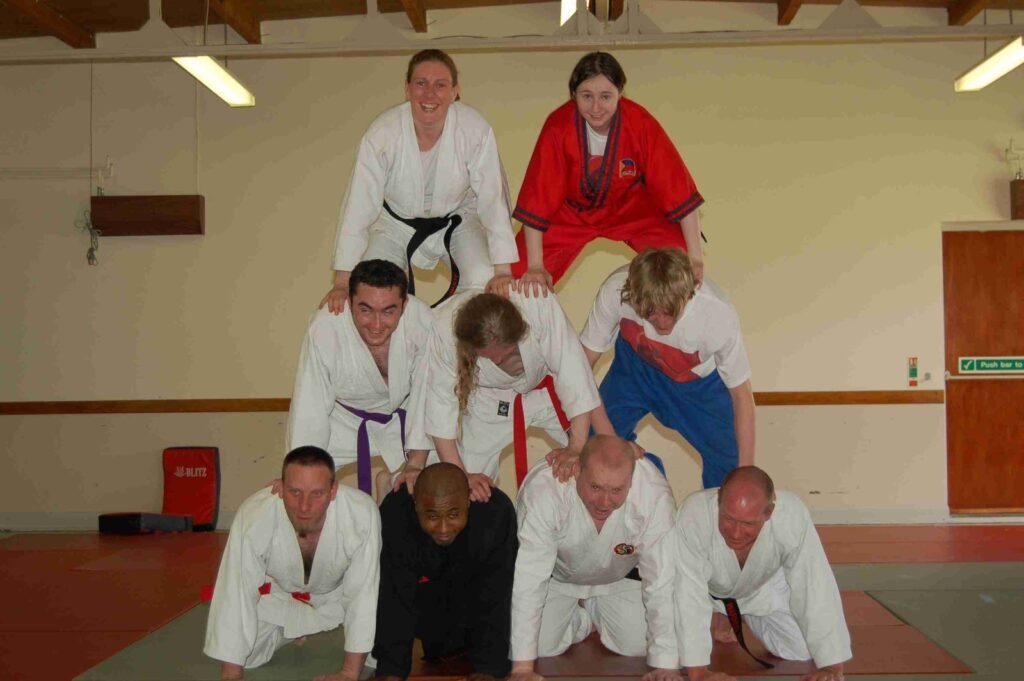
The best team is not one where everyone is at the same level. It’s one where each person can take part, learn and help create a good atmosphere. A more experienced student can remember how it felt to be new. A beginner can bring fresh energy and questions. Both are valuable members of the group.
Meet the people who bring different experience
A community also grows when people share what they know. The British Kempo Society brings together instructors with experience across different martial arts. You can meet the Society’s instructors and find out more about the people behind its training.
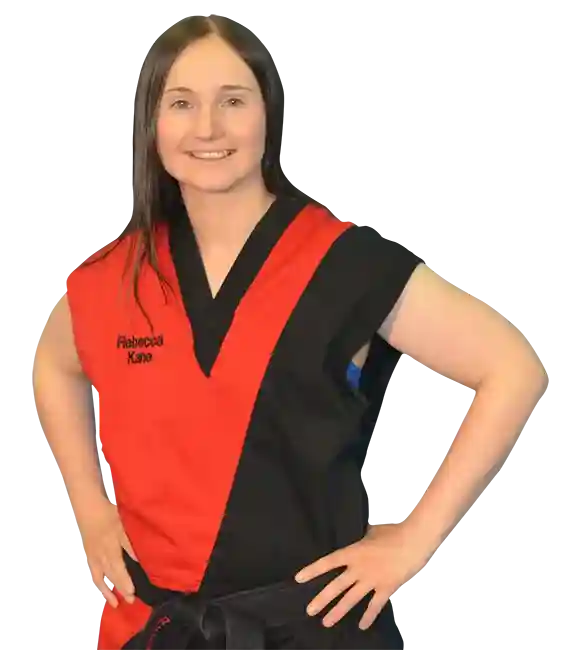
Rebecca Kane is a World Champion and Head of Weapons Training for the UK and Europe. Alongside her work with the Society, she offers online and in-person training. Her experience is one example of how a martial arts community can connect students with specialist knowledge while keeping learning accessible. Explore Rebecca Kane’s training and work at The Dancing Fighter.
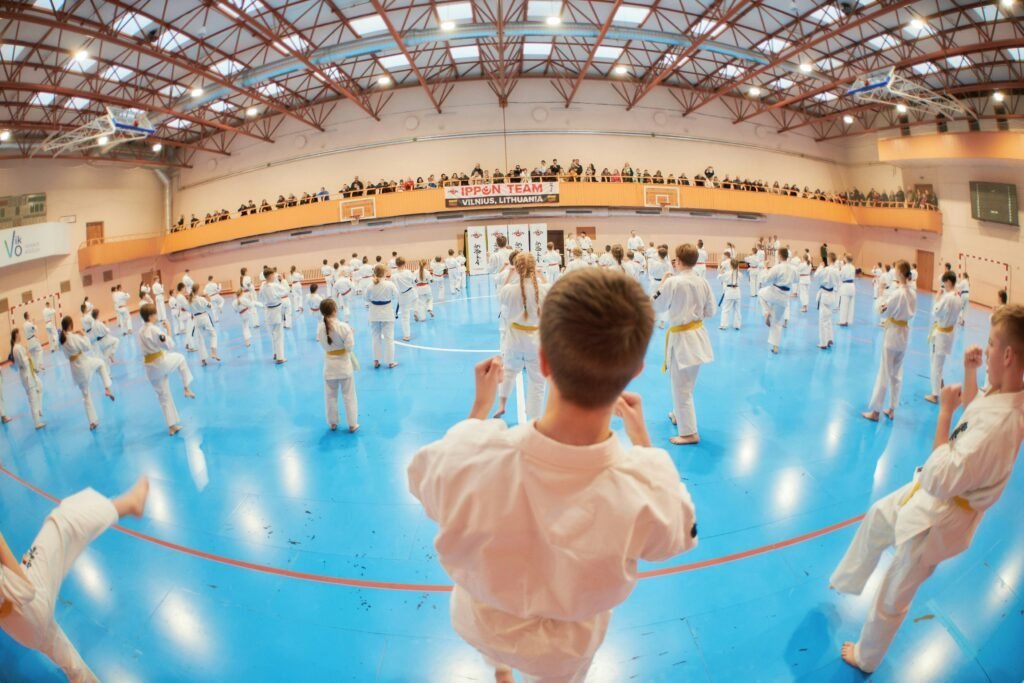
Seminars and shared training events can be another way to connect with the wider community. They bring people together to learn from different instructors, meet practitioners from other clubs and share a common interest. Whether you’re just starting or have trained for years, there’s value in being part of a group that keeps learning together.
A few small ways to feel part of the room
You don’t need to force friendships or arrive with a perfect introduction. Give connection a little time, and try a few simple things:
- Say hello to the person you’re paired with and ask their name.
- Ask an instructor or training partner if you’re unsure about a drill.
- Offer the same patience and attention you’d appreciate yourself.
- Come back when you can. Familiar faces often become familiar through repetition.
- Take part in the group, even in small ways: a greeting, a thank-you or a word of encouragement.
These gestures help make a class welcoming for everyone, including the next person who is new.
Find a class where you can belong
The right club should give you more than a timetable and a training space. It should offer good instruction, shared purpose and a community where beginners can join in and experienced students can keep learning.
If you’re in Yorkshire or Huddersfield and exploring kickboxing training, ju jitsu classes, or martial arts and self defense, take time to find out what the group is like. Shihan Ben Ledwick and the instructors connected with the British Kempo Society are part of a wider community built around learning, respect and shared practice.
Stay connected with the British Kempo Society for news about training and events, and contact the Society to ask a question or find out more. Learn about the community, keep in touch and come along to a class: you might find that the people on the mat become the best part of your training.