
Published 22 October 2026
Nervous about getting hit, being out of shape or facing a fight on your first night? You’re not alone. Here’s what beginner-friendly training really looks like, and how you can take it at your own pace.
Training perspective: Shihan Ben Ledwick, Head of Kempo Ju Jitsu, and Rebecca Kane, World Champion and Head of Weapons Training for the UK and Europe.
Walking into a martial arts class for the first time can feel daunting. You might imagine experienced students trading hard blows while everyone else watches. But responsible training is built around learning, respect and gradual progress, not throwing newcomers into a fight.
At the British Kempo Society, our community brings together different ages, backgrounds and experience levels. Whether you’re looking into martial arts and self defense, kickboxing training, or ju jitsu classes, it’s reasonable to ask how sparring works before you start. Here are five common fears, and the truth behind them.
Myth 1: “I’ll get hurt if I spar”
The truth: good training is controlled, supervised and progressed step by step.
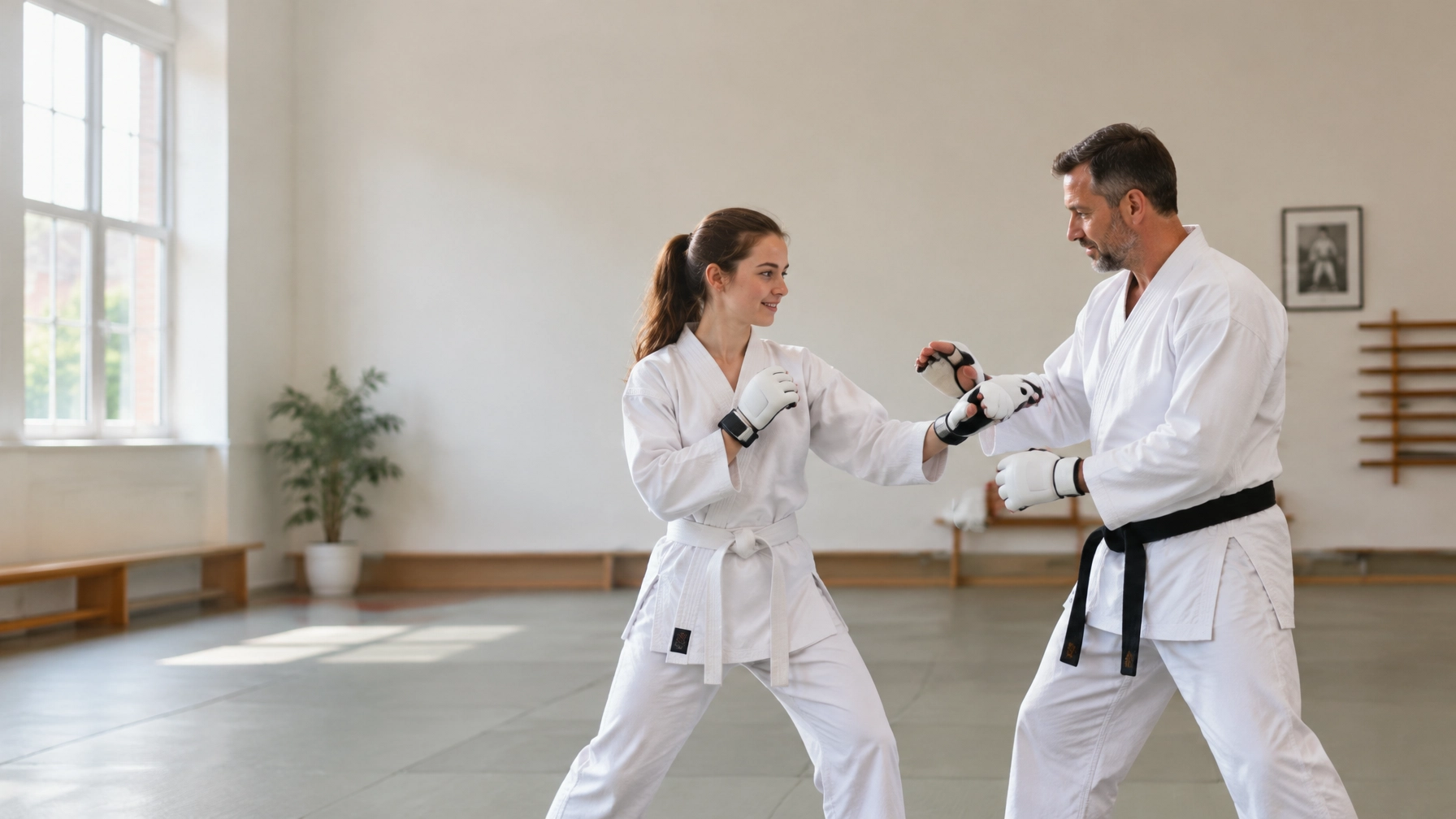
Sparring isn’t supposed to be a free-for-all. In beginner-friendly training, you first learn the basics: stance, movement, distance, defence and how to follow your instructor’s directions. You can practise those skills without contact, through solo movement, pad work and simple partner drills.
When students are ready to try more interactive practice, a coach can set clear limits. That might mean practising one technique at a time, taking turns attacking and defending, or doing light touch sparring. The aim is to help you recognise movement and practise control, not to win a fight.
Protective equipment depends on the activity and the drill. Kickboxing may involve gloves, wraps and shin guards; other practice may require different kit. Ask your instructor what’s needed and how it should fit. Protective gear can reduce some risks, but it doesn’t make hard contact risk-free. A good coach keeps the pace appropriate, watches closely and stops a drill if it stops being controlled.

Myth 2: “I’m not fit enough to take part”
The truth: you don’t need to arrive fit. You can build fitness as you learn.
A common worry is that everyone else will be faster, stronger or able to train for hours. In reality, people start for all sorts of reasons: getting active, building confidence, learning practical skills or meeting a welcoming community.
A beginners kickboxing session can include warm-ups, basic movement, technique practice and pad work. You can work at a level that suits you, take breaks when needed and build your stamina gradually. You don’t have to be the fittest person in the room to benefit from training.
If you’re considering martial arts for adults, let the instructor know you’re new and mention any relevant injuries or concerns. For parents looking at martial arts for kids, the same principle applies: a child shouldn’t have to match another student’s pace to belong. A supportive class helps each student work on their own progress.
Myth 3: “I have to fight on day one”
The truth: nobody should be thrown into fighting just because they’ve joined a class.
Your first class should be a chance to get familiar with the space, meet the instructor and learn some basics. You may practise movement, a simple technique or a partner exercise with clear instructions. That’s very different from being expected to spar.
Progression depends on the student, the class and the coach’s guidance. In Kempo and kickboxing, you might work with pads or practise a limited, predictable drill before considering light sparring. In Ju Jitsu, partner practice may focus on safe movement, positions or controlled technique. Not every class includes sparring, and you can ask what a particular session involves before you join.
For children, parents can ask how the club introduces partner work and what supervision looks like. A respectful instructor will be happy to explain. If you feel unsure, say so. Your confidence and safety matter more than rushing through a progression.

Myth 4: “Everyone will be better than me”
The truth: everyone in the room started somewhere.
It’s easy to compare your first class with someone else’s tenth year. But martial arts aren’t one long race against your training partners. Your first goal might be remembering a stance, getting comfortable with movement or learning how to listen for the next instruction. Those are real steps forward.
Training with a partner is a shared responsibility. A more experienced student should help keep an exercise suitable, while beginners get room to learn at their own pace. That’s one of the best things about a strong club community: people have different levels, but they can still encourage one another and celebrate each other’s progress.
The British Kempo Society’s instructors bring experience across different martial arts. Meet our instructors, including Shihan Ben Ledwick, Head of Kempo Ju Jitsu. Rebecca Kane is a World Champion and Head of Weapons Training for the UK and Europe. She also offers online and in-person training through The Dancing Fighter.
Myth 5: “Sparring is just about hitting harder”
The truth: good sparring is practice in timing, control and respect.
Sparring can help students practise skills with a partner who moves and responds, rather than a static pad. But it doesn’t have to mean trading heavy blows. A drill might involve keeping your distance, defending against one simple attack, or responding with a controlled technique. Students learn to pay attention, stay composed and respect their partner.
That makes sparring different from a street fight. There are rules, agreed limits, an instructor and a shared purpose: learning together. In Kempo, Ju Jitsu and kickboxing, the specific drills and equipment vary, so ask your coach what’s appropriate for your class and experience level. You can also ask whether there’s a non-contact option while you build confidence.

What a beginner-friendly class should feel like
Whether you’re searching for a kickboxing class for beginners, self defence classes or karate Huddersfield, look for a club where you can ask questions and learn without pressure. A good first conversation might be as simple as: “I’m new, and I’d like to understand how you introduce partner drills and sparring.”
The British Kempo Society describes its approach as inclusive and supportive, with training opportunities for different ages and skill levels. Learn more about the Society, its community and traditional roots. You can also get in touch to ask about a session before you attend.
A few useful questions to ask:
- What should I expect in my first class?
- Is sparring part of this session, and is it optional for beginners?
- What equipment do I need, and when?
- How do you adapt training for children or people returning to exercise?
Asking these questions isn’t a sign of weakness. It’s a practical way to find a class that fits you and to understand how training is managed.
Take your first step at your own pace
You don’t have to arrive confident, fit or experienced. You just need to be willing to learn, and you’re allowed to start with the parts that feel comfortable. With patient coaching and a supportive training community, practice can help you build skill, fitness and confidence one step at a time.
Stay connected with the British Kempo Society community for training news, events and shared learning. Ready to see if a class feels right for you? Explore our Society, meet the instructors, or get in touch and ask about joining a class.